The first time I tried making this savory mongolian-style beef bowl with crispy cabbage and garlic-ginger glaze, I completely ruined the cabbage.
Not burnt exactly. Worse. Limp.
I had sliced it too early and crowded the pan because I was impatient and hungry. Instead of getting those browned, crackly edges that make the whole bowl interesting, it just steamed itself into a soft pile underneath the beef. The sauce tasted fine, but the texture felt flat and weirdly heavy.
The second attempt changed everything.
I stopped treating the cabbage like a side ingredient and started cooking it like it actually mattered. High heat. Smaller batches. Less stirring than felt comfortable. That was the turning point.
Now it’s one of those meals I make when I want takeout-style flavor without the heavy, sticky overload that a lot of restaurant Mongolian beef bowls end up having.
The glaze is glossy but not syrupy. The garlic and ginger stay sharp enough to cut through the richness. And the crispy cabbage adds this slightly smoky crunch that honestly steals attention from the beef sometimes.
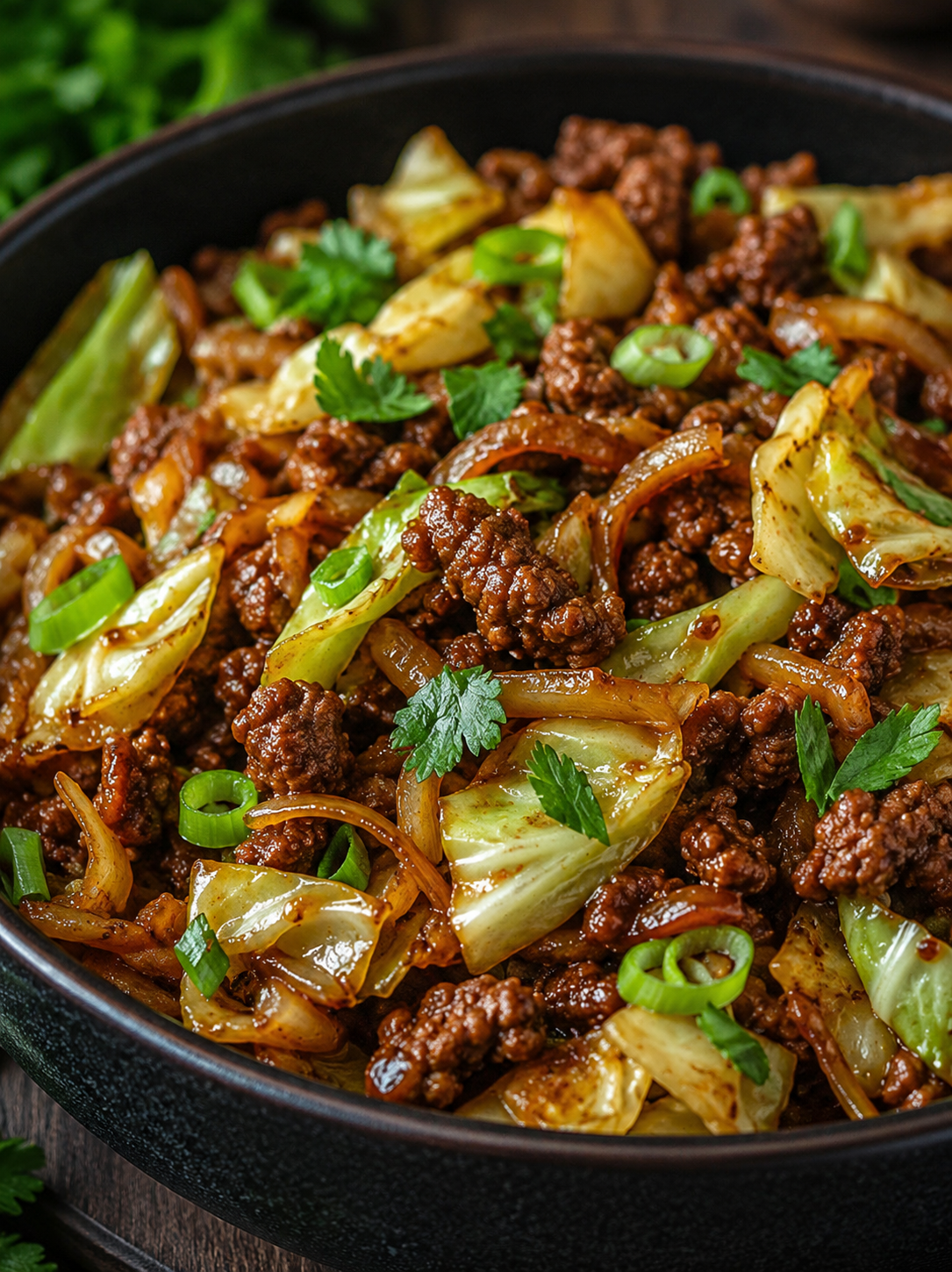
What Actually Makes This Bowl Work
A lot of Mongolian-style beef recipes rely almost entirely on sugar and soy sauce. That combination tastes good for maybe three bites, then everything starts tasting one-note.
What helped here was balancing three things carefully:
- enough sweetness for that classic Mongolian flavor
- enough acidity so the glaze doesn’t feel sticky
- enough texture contrast so the bowl doesn’t turn soft
The cabbage is doing more work than it seems.
If you skip the browning stage and just wilt it, the bowl loses most of its character.
I also learned the beef slice thickness matters more than expensive cuts. Thin slices cook fast enough to stay tender even with high heat. Thick strips turn chewy before the sauce reduces properly
Ingredients I Keep Coming Back To
For the beef and glaze
- 450g flank steak or sirloin, thinly sliced
- 2 tablespoons cornstarch
- 3 tablespoons soy sauce
- 1 tablespoon dark soy sauce
- 2 tablespoons brown sugar
- 1 tablespoon honey
- 5 cloves garlic, finely minced
- 1 tablespoon fresh ginger, grated
- 1 teaspoon rice vinegar
- 1 teaspoon sesame oil
- 120ml water or low-sodium beef stock
- neutral oil for cooking
For the crispy cabbage layer
- half a medium green cabbage, thinly sliced
- pinch of salt
- black pepper
- small drizzle of oil
For serving
- steamed jasmine rice
- green onions
- sesame seeds
- chili flakes if you want extra heat
I tested this once with pre-shredded cabbage from a grocery bag and it never crisped correctly. Too much moisture. Fresh cabbage slices hold up much better in the pan.
The Part I Used To Get Wrong
I originally tossed raw beef directly into the sauce.
Bad idea.
The liquid released from the meat diluted everything, and the glaze never properly coated the beef. It became more like soup over rice.
Now I coat the sliced beef lightly in cornstarch first and sear it separately before combining everything.
That tiny coating creates the glossy texture people usually think comes from lots of sugar or bottled sauce.
Cooking It Without Losing the Texture
Start the rice first because the rest moves fast.
Then get a large skillet or wok really hot before adding the cabbage. I mean hotter than feels necessary. If the pan isn’t hot enough, the cabbage sweats instead of charring.
Spread it out and leave it alone for a minute or two.
That’s another mistake I kept making. I stirred constantly because I thought it would burn. But the undisturbed contact with the pan is what creates those crispy browned edges.
Once parts of the cabbage start getting dark golden spots, season lightly and remove it from the pan.
Then cook the beef in batches.
Overcrowding is the fastest way to ruin this recipe. I learned that after one frustrating attempt where everything turned gray and watery. The beef should sear quickly, not simmer.
After the beef develops some browned edges, reduce the heat slightly and add the garlic and ginger.
This part smells incredible for about 20 seconds, then suddenly turns bitter if you wait too long.
As soon as the garlic becomes fragrant, pour in the soy sauces, sugar, honey, vinegar, sesame oil, and water.
Let it bubble hard for a couple minutes.
The sauce should thicken enough to coat the back of a spoon, but not become sticky like candy glaze. If it reduces too much, adding a splash of water brings it back surprisingly well.
Toss the cabbage back in right at the end instead of simmering it in the sauce for ages.
That keeps some crunch alive.
One Unexpected Thing I Noticed
The leftovers tasted better the next day, but only if I stored the cabbage separately.
The first time I refrigerated everything together, the cabbage absorbed all the sauce overnight and became soft in a sad way.
Now I keep the crispy cabbage in a separate container and reheat it briefly in a dry pan before serving again. The texture comes back surprisingly well.
The leftovers tasted better the next day, but only if I stored the cabbage separately.
The first time I refrigerated everything together, the cabbage absorbed all the sauce overnight and became soft in a sad way.
Now I keep the crispy cabbage in a separate container and reheat it briefly in a dry pan before serving again. The texture comes back surprisingly well.
Small Changes That Actually Matter
Fresh ginger vs ginger paste
Fresh ginger makes a noticeable difference here. The bottled paste version tasted flatter and slightly sweet in a processed way.
Dark soy sauce
You can technically skip it, but the color and deeper savory flavor help the bowl taste closer to restaurant-style Mongolian beef.
Cornstarch timing
Don’t coat the beef too early.
I once left it sitting for 25 minutes while answering emails and the beef turned oddly gummy before cooking.
Five minutes before cooking is enough.
If You Want It Closer to Restaurant Mongolian Beef
Most restaurant versions are sweeter and heavier.
For that style:
- increase brown sugar slightly
- add more oil
- reduce the vinegar
Personally, I like this version better because the garlic-ginger glaze tastes sharper and less sugary. It feels easier to keep eating without getting overwhelmed halfway through the bowl.
Final Thoughts
What kept surprising me with this savory mongolian-style beef bowl with crispy cabbage and garlic-ginger glaze was how much the texture controlled the entire experience.
The sauce matters, obviously. But the crispy cabbage is what stops the bowl from becoming another overly soft takeout copycat recipe.
Once I stopped rushing the browning stages, the whole recipe started tasting more balanced and intentional instead of just salty-sweet beef over rice.
It’s one of those meals where the small cooking details quietly decide whether it tastes average or genuinely memorable