Texas Roadhouse White Gravy Recipe (What Took Me Longer Than Expected to Get Right)

I thought white gravy would be one of the easiest things to recreate.

Butter, flour, milk… done.

That’s what I assumed before trying this Texas Roadhouse white gravy recipe at home. But the first time I made it, something felt off—not in ingredients, but in texture. It was either too thick or slightly pasty, and the flavor didn’t have that smooth, peppery finish I was expecting.

It took me a couple of tries to realize the issue wasn’t what I was using—it was how I was cooking it.

This versatile white gravy goes well with mostly every roasted vegetable. Try my recipe: CAVA Fiery Broccoli Recipe

Texas Roadhouse White Gravy Recipe

The Moment I Realized What I Was Doing Wrong

On my first attempt, I rushed the roux.

I cooked butter and flour for maybe a minute and then added milk quickly. It thickened—but tasted slightly raw, like flour hadn’t fully cooked out.

That’s when I learned something simple but important:

White gravy depends heavily on how well you cook the base (roux).

A proper roux is what gives it that smooth, creamy texture instead of a heavy, gluey feel.

What Actually Makes This Gravy Work

After a few attempts, three things made the biggest difference:

  • Cooking the flour and butter for at least 2–3 minutes
  • Adding milk slowly instead of all at once
  • Letting it simmer just enough to thicken—not rushing it

White gravy may look simple, but it’s very sensitive to timing.

What I Use Now (After Testing a Few Versions)

  • Here’s what worked best consistently:

    • Butter (or a mix of butter + pan drippings)
    • All-purpose flour
    • Whole milk
    • Black pepper
    • Salt

    One thing I noticed:
    Using whole milk made it noticeably creamier compared to low-fat milk, which felt thinner and slightly less rich

How I Make It Now (Step-by-Step With Real Observations)

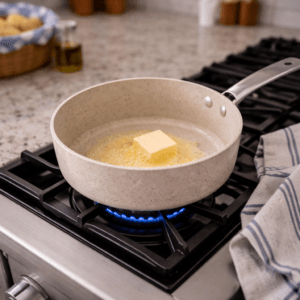
Step 1: Start with butter

Melt it over medium heat—not high.

I once overheated it and the gravy ended up slightly greasy instead of smooth.

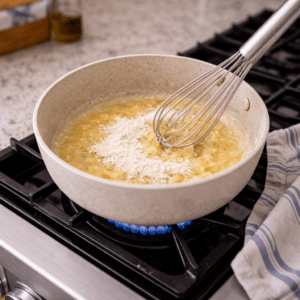
Step 2: Add flour and cook properly

This is the step I used to rush.

Now I let it cook for about 2–3 minutes, stirring constantly.

At first, it smells like raw flour.
After a couple of minutes, the smell changes slightly—more nutty, less sharp.

That’s when I know it’s ready.

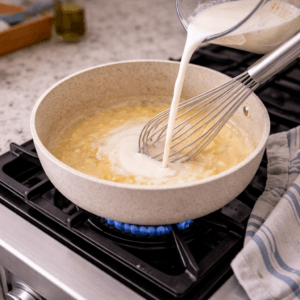
Step 3: Add milk slowly (this matters more than I expected)

Instead of pouring everything at once, I add milk in parts.

  • First small splash → whisk
  • Then more → whisk again

This is what prevents lumps.

I skipped this once and ended up with tiny clumps that never fully disappeared.

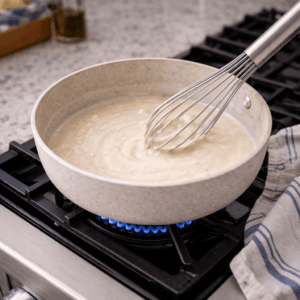
Step 4: Let it simmer and watch texture

Around 3–5 minutes, it starts thickening.

At first, it looks thin—don’t panic.

Then suddenly it changes.

That’s your moment.

If you cook too long after that, it becomes too thick and heavy.

Step 5: Texture Check (This Helped Me the Most)

When it’s right:

  • Smooth and pourable
  • Slightly thick, not gluey
  • Coats the spoon lightly

When it’s wrong:

  • Too thick → overcooked or too much flour
  • Too thin → not enough simmer time

One Small Change That Made It Taste Better

I started adding black pepper after the gravy thickened instead of at the beginning.

It gave a fresher, more noticeable flavor—closer to what I remember from restaurant-style gravy.

How Close Is This to Texas Roadhouse?

  • It’s very close in texture.

    Flavor-wise:

    • Mine is slightly more pepper-forward
    • Restaurant version feels a bit smoother

    If you want it closer:

    • Use less pepper
    • Cook slightly longer for smoother consistency

A Mistake That Took Me Two Tries to Fix

I once added too much flour thinking it would thicken faster.

It did—but the result felt heavy and slightly chalky.

After that, I stopped trying to “speed it up” and just let it cook naturally.

Where This Gravy Actually Works Best

I originally made this just for mashed potatoes—but it’s better with:

  • Chicken fried steak
  • Biscuits
  • Fried chicken

That’s where the texture really shines.

Storage (And Something I Didn’t Expect)

It thickens a lot in the fridge.

The first time I reheated it, it looked almost solid.

Fix:
Add a splash of milk and stir while heating—it comes back perfectly.

Final Thought

This is one of those recipes that looks simple but teaches you patience.

Once you understand how the roux behaves and stop rushing the process, everything falls into place.

Now it’s something I can make quickly—but only because I stopped trying to make it too quickly.

About Me

Hi, I’m Mayank, the home cook behind The Calorie Curry. I spend most of my time experimenting in my kitchen, cooking for friends and family who often say my food tastes like it came from a pro chef. Their honest feedback and my love for simple, homemade cooking inspire every recipe I share here.

Texas Roadhouse White Gravy Recipe

Texas Roadhouse White Gravy Recipe

A creamy, peppery white gravy inspired by Texas Roadhouse style, made by properly cooking a roux and slowly adding milk for a smooth, lump-free texture. This version focuses on timing and technique rather than shortcuts.
Prep Time 5 minutes
Cook Time 10 minutes
Total Time 15 minutes
Servings: 4
Course: Sauce / Dip
Cuisine: American
Calories: 180

Ingredients
  

  • 2 tablespoons butter
  • 2 tablespoons all-purpose flour
  • 2 cups whole milk add gradually
  • ½ teaspoon salt adjust to taste
  • 1 teaspoon freshly ground black pepper
  • 1 tablespoon pan drippings for extra flavor optional

Method
 

Step 1: Melt the Butter (Low Heat Matters)
  1. Melt the butter in a pan over medium heat until fully melted but not browned.
    Texas Roadhouse White Gravy Recipe (What Took Me Longer Than Expected to Get Right)
Step 2: Add Flour and Build the Roux
  1. Add the flour and cook for about 2–3 minutes, stirring continuously.You’ll notice the smell change from raw flour to slightly nutty—this is important for smooth flavor.
    Texas Roadhouse White Gravy Recipe (What Took Me Longer Than Expected to Get Right)
Step 3: Slowly Pour Milk (This Is the Key Step)
  1. Start adding milk slowly in small portions while whisking constantly.This prevents lumps and helps the gravy stay smooth.
    Texas Roadhouse White Gravy Recipe (What Took Me Longer Than Expected to Get Right)
Step 4: Let It Thicken Naturally
  1. Continue cooking and stirring for 3–5 minutes until the gravy thickens.It should coat the back of a spoon but still be pourable.
    Texas Roadhouse White Gravy Recipe (What Took Me Longer Than Expected to Get Right)
Step 5: Season & Taste
  1. Add salt and black pepper toward the end. Taste and adjust seasoning if needed.

    Texas Roadhouse White Gravy Recipe (What Took Me Longer Than Expected to Get Right)

Notes

  • Cooking the flour properly is what prevents that raw, pasty taste
  • Adding milk slowly makes a big difference in texture
  • If the gravy gets too thick, just add a splash of milk and stir
    Don’t rush the roux—this is where most mistakes happen Keep heat medium, not high (high heat can make it greasy) Stir constantly to avoid sticking or clumping

Leave a Comment

Your email address will not be published. Required fields are marked *

Recipe Rating


Scroll to Top